India’s Role as a Key Parboiled Non-Basmati Rice Exporter to the Philippines
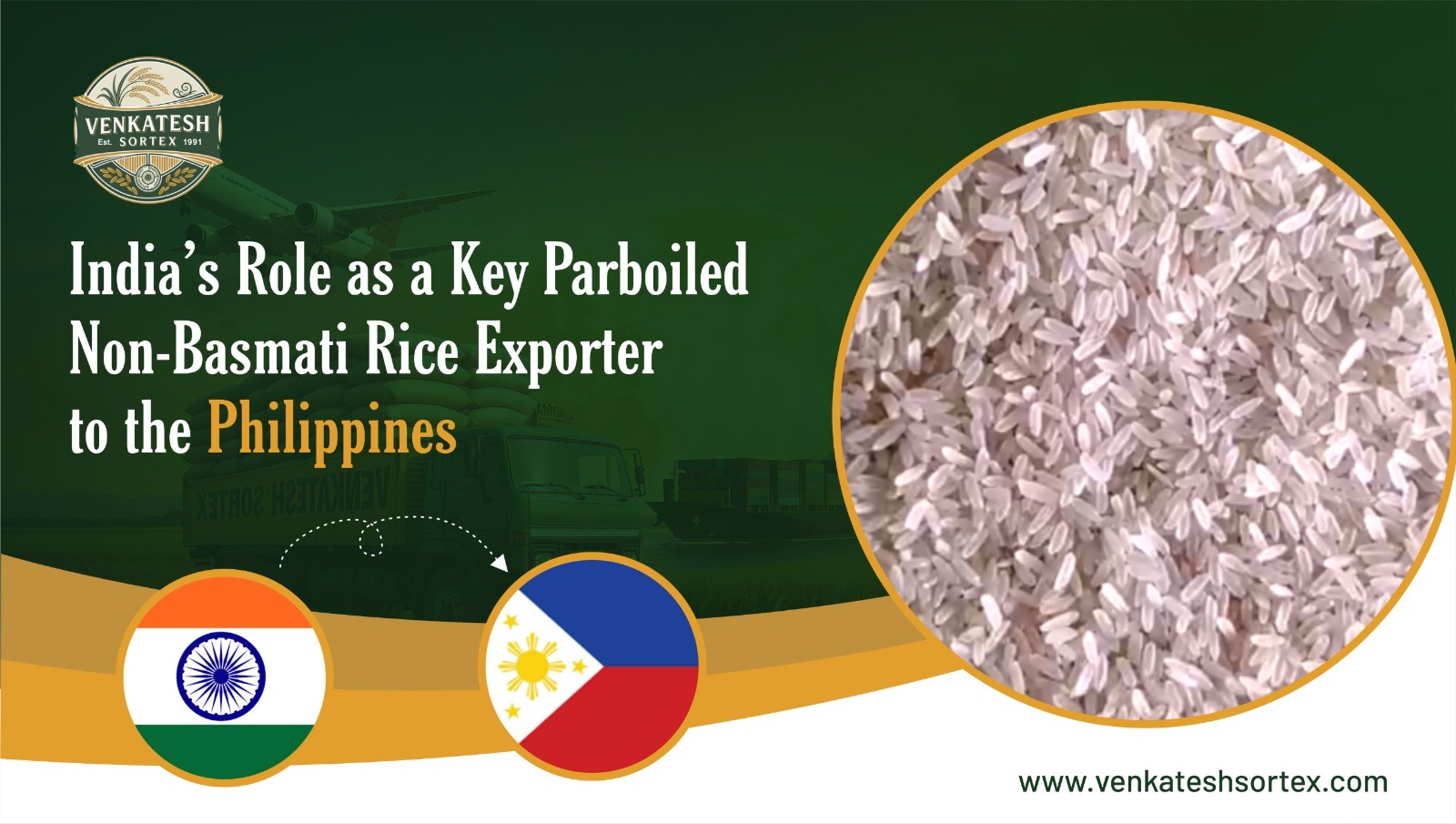
India is one of the leading global suppliers of rice, supplying rice to various countries around the world. India is a major supplier to many countries around the world because of its size, agricultural resources, climate, and efficient processing/harvesting infrastructures. However, the Philippines has become an increasingly important customer of Indian rice. In recent years, India has also established itself as a reliable supplier of parboiled non-Basmati rice exporter to the Philippines and is supporting the ECs in their efforts to meet the increasing demand for quality rice at affordable prices.
Parboiled non-Basmati rice is a common food source in the Philippines and is consumed by millions of Filipinos each day, but as a result of an increasing population with limited local production capability, the Philippines is generally reliant on imported rice to achieve a stable source of food. Parboiled non-basmati rice has gained popularity because of its nutritional value, longer shelf life, and firm texture after cooking.
India is among the top producers of rice in the world which puts them among the select few that export Parboiled Non-Basmati rice to PH.
Indian suppliers capable of supplying large quantities of rice at lower prices are considered the preferred vendors for importers and distributors purchasing rice in the Filipino rice market.
What makes parboiled different from other types of rice?
Parboiled rice is a rice that has been partially cooked in its shell. As a result, it has absorbed vitamins and minerals from the outer shell of the rice into the grain from which it was milled. Parboiled rice is also going to have more strength while being loaded for shipping and while being stored than un-parboiled rice will have.
Three significant aspects of Parboiled Non-Basmati rice make them great options for selling to other nations as well as in the Philippines.
More nutrition than typical white rice
Stronger grain that will break less often as a result of milling operations at the mill.
Shelf life is very similar for both rice types; however, the shelf life for parboiled rice is usually longer than the shelf life for un-parboiled rice.When the grains are prepared, they will be prepared separately from each other and not stuck together like the grains of other types of rice.India is one of the leading producers of rice, which has made it one of the world’s few trusted Parboiled Non-Basmati Rice Exporters to PH. Because Indian suppliers can provide a high volume of rice at low prices, they are the preferred suppliers for many importers and distributors who buy rice in the Filipino rice market.
What is the parboiled rice’s different from other kinds?
The parboiled rice is partially cooked in its shell and takes vitamins and minerals from its outer shell into the grain that was used to make it before milling. Because the rice is parboiled, the rice will be stronger in transit and storage than un-parboiled rice.
Three important factors that make Parboiled Non-Basmati Rice an excellent choice to sell internationally, like in the Philippines:
- More nutritional value than normal white rice
- Stronger grain strength which produces fewer broken grains during the milling operations of the mill.
- While the shelf life of both rice types is long, the shelf life of parboiled rice is typically longer than the shelf life of un-parboiled rice.
When the grains are prepared, they will be prepared separately from each other and not stuck together like the grains of other types of rice.Due To These Characteristics, Parboiled Rice Is The Ideal Rice For Importers And Distributors Of Rice To Use When Storing And Distributing Rice To The Various Islands Within The Philippines.
India’s Competitiveness As A Rice Exporter: Many elements support the continued dominance of India in the global rice market: an abundance of well-established rice-growing areas, modern processing facilities, and an efficient export system. Farmers successfully provide a broad range of rice varieties that fulfill both domestic consumption and international demand.
Moreover, Indian exporters are required to comply with stringent quality norms that guarantee each rice shipment meets the food safety requirements of their international markets. These qualities contribute to India’s status as a dependable exporter of Parboiled Non-Basmati Rice to the Philippines and create an environment where long-term trading relationships can exist between Indian and Filipino importers.
Increasing Trade between India and the Philippines: The trade of rice between India and Philippines has enjoyed significant growth over recent decades. Government policies, trade agreements, and strong supply chains have made it easier for Filipino businesses to import rice from India.
To ensure a stable supply of rice in the Philippines and support economic development in both countries, India collaborates with international buyers to ensure consistent quality, timely delivery, and competitive pricing.
Economic Impacts on Both Countries
Rice exports create job opportunities for agricultural workers/marketers and logistics workers across many sectors in India and the impacted regions of the Philippines. Economically, they will support millions of jobs – including farmers, millers, warehousemen, truck drivers, etc. – who contribute to India’s economy and help provide a steady flow of rice as part of the Philippines’ economic development program through stable, affordable food prices and sufficient rice availability year-rou
Conclusion: As India continues to expand its influence in the international rice trade, it is especially important to develop relationships with countries that are dependent on imported rice due to their lack of land or capacity for domestic rice production. Because of the modern processing capabilities, strong logistics, and the overall strength of India’s agricultural infrastructure, India has emerged as a leading supplier of parboiled non-basmati rice to buyers all over the world.
It is expected that India’s position as the primary supplier of parboiled non-basmati rice to the Philippines will also continue to grow as demand for rice in the Philippines continues to increase. This long-term relationship not only improves food security, but also helps maintain and strengthen the economic ties between countries involved in this trade.